
Survivor Strategy Analytics

The Tribe Has Spoken.
The Numbers Were Listening.

Are you a Survivor superfan who wants to go deeper than edit-bias, hot takes, and gut feelings? The Torch is the only Survivor fan site built entirely on data — 893 castaways across all 49 US seasons, hand-coded on 87 strategic variables and measured against the only rubric that has ever mattered.

Outwit · Outplay · Outlast
49
Seasons
893
Castaways
87
Variables per player
100%
Data-driven

What questions would you like answered?

Got a Survivor stat you've always wondered about, a theory that needs data, or a castaway you want profiled? Drop it here and it might become the next page on The Torch.

Pick your path to the end

What the numbers actually say

Every claim on this site traces back to a cell in the dataset — a few things the edit will never tell you:

Winning archetypes have eras

The Con Man won early — then the game caught on

All three Con Man wins cluster in the early game (average season: 14). Social Butterfly is the most common winning archetype ever (6 wins, avg season 24), while the Crusader is the modern closer (3 wins, avg season 42).

The advantage explosion is real

2.5 → 9.7 advantages per season

Counting from Season 11 (the first season an advantage existed), advantages in play per season grew ≈ +287% into the New Era, and hidden immunity idols found per season roughly doubled (2.2 → 4.4).

Returnee winners don't repeat — they reinvent

61% of their game changed direction

Across the six players who won on their second try, 61% of their measured dimension-changes were full reversals of their first game — only 19% were amplifications of an existing strength.

See the Data

893 castaways. 87 variables. One spreadsheet.

The full hand-coded dataset behind every chart on this site — Outwit/Outplay/Outlast scores, challenge stats, vote accuracy, alliances, deception, threat ratings, advantages and more, plus a Codebook sheet describing every variable.

Excel workbook · Player Data + Codebook · all 87 variables
Player Profiles

Winner Radars

Every Sole Survivor from Season 1 to 49, fingerprinted on six strategic axes — deception, vote accuracy, swing votes, blindside reads, individual immunity, and composure. Click + on any card (or drag it into the tray) to compare winners head-to-head.

All Winners — Seasons 1–49
Player Profiles

Losing Finalist Radars

The 83 players who made Final Tribal Council and heard someone else's name read — runners-up and third-place finishers, on the same six axes as the winners. Compare them to see what a jury actually rewards.

Losing Finalists — Seasons 1–49
By Season · Season 20

Heroes vs. Villains: Coalition Autopsy

Every tribal council of Season 20, reconstructed from co-voting records. The left map shows the factions of each single vote; the right map is the cumulative ledger of every bond formed. Press play and watch Sandra's win assemble itself.

Heroes vs. Villains — Alliance Mapping, Tribal by Tribal
Trends

Game Evolution

Three eras — Old School (S1–20), Modern/Idol (S21–40), New Era (S41–49) — and what actually changed: the hardware, the voting, the challenges, and the temperament of the game.

Winning archetypes have eras

Group the 49 winners by casting archetype and the game's history writes itself: schemers won early, social players won always, and conviction wins now.

Early-era closer

Con Man

avg S14

3 wins, all clustered early. Pure villainy cashed out before the game learned to see it coming.

The all-time archetype

Social Butterfly

6 wins

The most common winning archetype in Survivor history — wins spread across every era (avg season 24).

The modern closer

Crusader

avg S42

3 wins, all late. In the New Era, a jury wants a mission — conviction beats con.

The Strategy of Survivor — Era Trends Dashboard
Trends

Who gets cast

Casting is the game before the game. Age bands, personality types, archetypes, geography, and occupations for all 893 castaways — and how the recruiting profile shifted era by era.

Casting the Castaways — Demographics by Era
Trends

Returning Players

104 castaways came back for a second shot. Clustering their gameplay shows who they were the first time, who they became — and how the six who actually won the second time pulled it off.

Round one: who they were

Four first-season archetypes emerge from clustering 104 future returnees on six gameplay dimensions.

Returnees — First-Season Archetypes

Round two: who they became

Same players, second season. The clusters reshuffle — icons crash, followers fade, and a small group adapts.

Returnees — Second-Season Archetypes

The six who won round two

Returnee winners didn't just play harder — 61% of their dimension-changes were outright reversals of their first game.

Returnee Winners — How They Reinvented Their Game
Trends

Advantage Power Rankings

Not all advantages are created equal. We measured every advantage ever found or received on US Survivor — 244 acquisitions across Seasons 11–49 — by one question: once a player got it, how much farther did they actually go than the players around them? Everything is scored against the game's original piece of hardware: the Hidden Immunity Idol = 1.00.

The overpowered option

Super Idol

1.67

Only 5 players ever held one — and they outlasted 93% of the field. The most powerful object ever hidden on a beach.

The baseline

Hidden Immunity Idol

1.00

157 idols found or received. Holders outlast 55.6% of the players still in the game when they get it — non-holders manage just 45.3%.

The cursed advantage

Knowledge is Power

0.63

Its holders place worse than the people around them, outlasting just 39.8% of the field. Never played successfully.

Every advantage, measured against the idol

Strength ratio: how far holders of each advantage outlast the field, relative to what Hidden Immunity Idol holders do. Above 1.00 = stronger than an idol; below = weaker. Advantages with fewer than 5 holders are grouped into “Other rare advantages.” Hover any bar for detail.

0 0.5 1.5 IDOL = 1.00 1.0 Super Idol n = 5 1.67 Extra Vote n = 20 1.02 Hidden Immunity Idol n = 157 1.00 · BASELINE Amulet n = 9 1.00 Other rare advantages n = 26 0.92 Challenge Advantage n = 8 0.87 Hidden Immunity Idol Half n = 7 0.78 Steal a Vote n = 7 0.67 Knowledge is Power n = 5 0.63

What the ranking actually says

A real, repeatable +10-point edge

Across 157 idols, holders outlast 55.6% of the players still in the game when they get one, vs 45.3% for everyone else: the largest-sample effect in the dataset.

The Extra Vote quietly matches the idol

Twenty players have held an Extra Vote and they perform at 1.02 — statistically the idol's equal. The Amulet (1.00) keeps pace too. Quiet advantages don't paint targets.

Vote manipulation underdelivers

Steal a Vote (0.67) and Knowledge is Power (0.63) sit at the bottom of the board. Advantages that let you attack other players seem to make you the threat — their holders exit earlier than the field around them.

The full board — all 20 advantage types

Including the rare ones the headline chart folds into “Other.” The ⚠ mark means fewer than 5 holders — treat those as trivia: one great or terrible game swings the whole number.

AdvantageHoldersField outlasted (holders)Field outlasted (non-holders)Strength (idol = 1.00)
Super Idol593.1%45.4%1.67
Control the Vote190.0%46.0%1.59⚠ small sample
Reward Stealer268.8%44.7%1.25⚠ small sample
Goodwill Advantage364.1%47.0%1.11⚠ small sample
Bank your Vote463.5%48.6%1.06⚠ small sample
Block a Vote363.9%49.0%1.06⚠ small sample
Extra Vote2058.8%46.9%1.02
Hidden Immunity Idol ★ baseline15755.6%45.3%1.00
Amulet959.0%48.1%1.00
Advantage Menu158.8%49.5%0.97⚠ small sample
Safety without Power358.1%49.0%0.97⚠ small sample
Challenge Advantage851.4%48.0%0.87
Idol Nullifier448.7%49.4%0.80⚠ small sample
Hidden Immunity Idol Half748.3%50.6%0.78
Steal a Vote741.9%50.6%0.67
Knowledge is Power539.8%51.2%0.63
Vote Blocker239.3%50.8%0.63⚠ small sample
Preventative Hidden Immunity Idol125.0%53.1%0.38⚠ small sample
Inheritance Advantage123.5%51.6%0.37⚠ small sample
Choose your Champion116.7%55.6%0.24⚠ small sample

How we measured it

Built from the survivoR project's advantage-movement log — every find, hand-off, and play across Seasons 11–49.

1 · The moment of acquisition. For each of the 244 times a player found or received an advantage, we reconstruct exactly who was still in the game at that moment.

2 · Field outlasted. We score the holder by the share of those remaining players they went on to outlast — a winner scores 100%, an immediate boot scores 0%. By pure chance you'd expect ~50%.

3 · The comparison group. We compute the same score for every remaining player who never held that advantage type that season, and take the ratio: holder performance ÷ non-holder performance.

4 · Normalize to the idol. Each advantage's ratio is divided by the Hidden Immunity Idol's ratio, so the idol reads exactly 1.00 and everything else reads as “idol-equivalents.” A player's first acquisition of each advantage type per season counts once; types with fewer than 5 holders are grouped as “Other rare advantages” (Advantage Menu, Bank your Vote, Block a Vote, Choose your Champion, Control the Vote, Goodwill Advantage, Idol Nullifier, Inheritance Advantage, Preventative Hidden Immunity Idol, Reward Stealer, Safety without Power, Vote Blocker).

Interview With Maria Shrime Gonzalez

On the implosion of the Journey Six, the season the idols kept going home in players' pockets, and why two is greater than three.

Maria Shrime Gonzalez hugs Jeff Probst after winning individual immunity on Survivor 46

I recently had the amazing experience of talking to Maria Shrime Gonzalez of Season 46 of Survivor about her strategy and decision-making on the show. Maria began Season 46 on the Siga tribe and finished in fifth place after being deemed the biggest overall threat to win the game. During her time on the show, she won three individual immunities, only one short of the women's all-time record. For those of you who missed Season 46, I think that the best way to convey Maria's physical performance was that she had to be double-teamed in the Final Five immunity challenge.

Our conversation spanned everything from the implosion of the Journey Six, to the record-breaking idol plays (or lack thereof) in Season 46, to what Maria would do if she played again. Without further ado, I am excited to share some Survivor strategy insights from the one and only "Lieutenant Mom."

Siga Strong?

Maria's original tribe, Siga—affectionately referred to as "the vibe tribe"—projected an image of cohesion and kinship for much of the pre-merge. Maria corroborated that reputation when it came to communication during challenges but revealed that camp life was not always as smooth as it seemed due to the realities of spending 24/7 with a group of six strangers. She noted that "There was definitely cohesion when it came to the challenges. There was definitely unrest and rumblings behind the scenes." Ultimately though, Siga "could always pull it together for the challenges" and went to Tribal Council only once, preventing much outright conflict from occurring.

Two is Greater Than Three

Maria formed several alliances of varying sizes throughout her time on the island, from the infamous Journey Six alliance to a dynamic duo with Charlie. I asked her about the decision-making process behind joining each of these alliances and what her biggest conclusions about alliance size were after being a part of voting blocs of all sizes.

The Journey Six was both one of the most prominent voting blocs of the season, but also among the fastest to fall apart. Maria recognized the "brilliant" potential of the alliance but attributed its instability to the lack of trust within the group. When tribemate after tribemate turned on each other despite non-Journey Six members being vulnerable, Maria quickly realized that "This Six is baloney. Nobody's actually true to this Six." However, Maria did get something out of the Six—she credited her relationship with Q to the loyalty he displayed when Tiff, another member of the alliance, threw Maria's name out.

I had also long wondered about the viability of the "buddy system" strategy—forming a pair early in the game and sticking it out until the end. Maria explained to me her decision to align herself with fellow original Siga-member Charlie. In new era Survivor where tribes are made up of only six people, many alliances of two or three people form, and "two is safer than three"—in an alliance of three, she reasoned, one person will inevitably be the least trusted. With a group of two, you can hold the most trust. Of course, she conceded, there will always be a point where you must reconsider your partnership: "You have to be willing to constantly pivot. I knew from the beginning; this is who I'm working with until I need to find somebody else. If we ended up lasting the whole time, great. If I needed to make a change, I needed to make a change."

Her key takeaway for forming alliances? "The one thing that is good is having a lot of options."

Not-So-Hidden Immunity Idols

Season 46 holds the record for the season with greatest number of castaways voted out while holding an idol: five in total and four consecutively. I asked Maria her opinion on how to handle Survivor hardware, having been on the blindsiding side of this streak. She noted that she consciously played her Extra Vote before the merge so that she wouldn't be targeted for having an advantage. She told me that "I knew I had to come into that merge with nothing, no threat level that I was bringing with me. So not only are you a physical threat, but you have an idol too — it's a no-brainer." This strategy enabled Maria to stay on the island while players such as Tevin and Tiff were voted off in large part due to their advantages and idols.

Hiding Your Strong Hand

Ask anybody who has watched Season 46 who was seen as the biggest threat starting almost immediately after the merge, and they will say Maria. By the Final Six, almost everybody except for Q was gunning for her, as she seemed to have the greatest chance of winning. I asked Maria if she could sense this perception building and whether she believed there is any way to come back from being identified and labelled as a threat. She told me that she could sense the heat immediately after the merge, saying that "Right after I won that first challenge and was labeled a threat, I immediately went into 'lower my threat level' mode until I had to win." While fellow challenge threats such as Hunter, and advantage-holders such as Tevin were voted out early after the merge, by the Final Six, Maria was clearly the biggest target. She had spent much of the game focusing on taking out the big threats, but she came to realize too late that "it was the people on the outskirts that banded together." "Blindly, I wasn't looking at them," she said. If there was one thing Maria said could have rescued her, she "should have paid more attention" to these players on the outskirts.

"Put Me With People That Ruffle Feathers"

Maria's recommendation for the next returnee season: Villains vs. Villains.
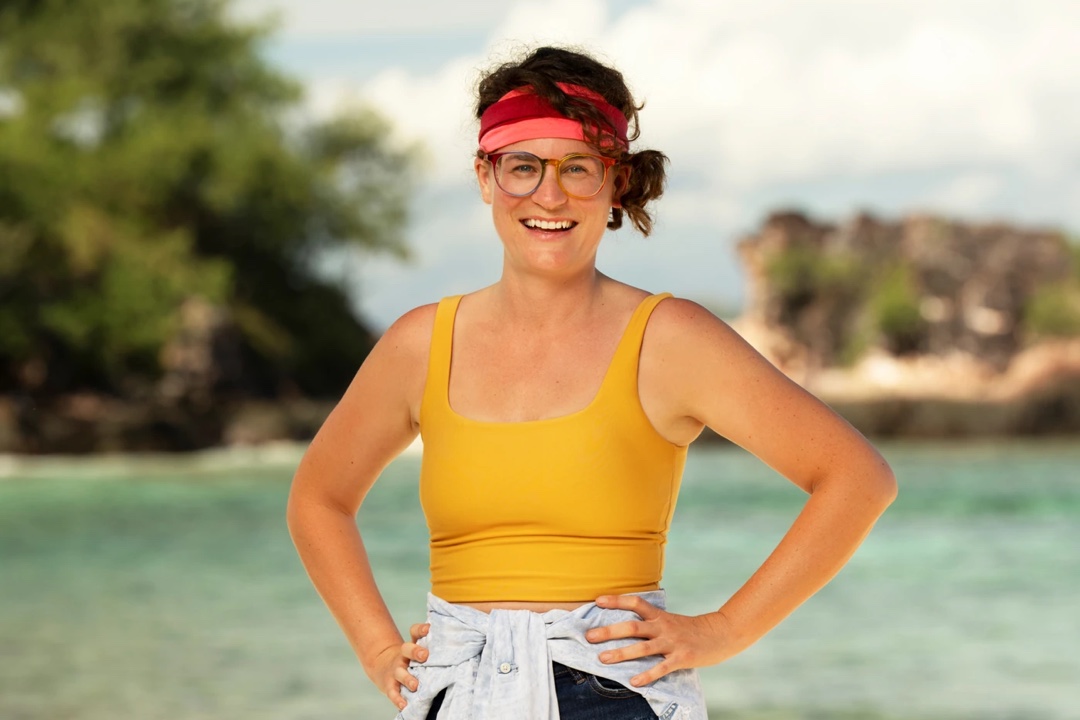
"I would love villains vs. villains. Old era villains and new era villains. The shenanigans, the constant 'Can I trust? Can I not?' — that would be epic for me."

Advice for Future Castaways

"Trust no one — but you have to trust someone."

Interview With Liz Wilcox

Liz Wilcox, member of the Nami tribe on Survivor 46

I recently had the opportunity to chat with Season 46's one and only Liz Wilcox. We got to discuss all things Survivor strategy, including the infamous millionaire lie, the Tevin blindside, and what her favorite idea for a new returnee season is (Game Changers II, anyone?). Here are the highlights of our conversation—find the full transcript here.

Building the Nami Foundation

Sofie

On day two of the game you already had an alliance with Hunter and Tevin — the Shelter Alliance — and you bonded over your strong work ethics and building the shelter. And then Nami never goes to Tribal Council before the merge. So I'd love to know how much of your early game was really deliberate foundation laying, and did going that long without a vote make the tribe dynamics easier or harder to read going into the merge?

Liz

Yeah, so a lot of it was that foundational work…I could see that Hunter and Tevin, they were kind of bonding even on day one. And I woke up on day two and I was like, I'm in trouble… I came in too hard…So I was like, okay, day two, I need to tone it down. I need to humble thyself.

And so I saw my opportunity when Hunter and Tevin were in the shelter, making the shelter, everyone else was kind of doing their own thing, not doing the things that we had said. And I said, "Hey, well, where's so-and-so?" I can't remember who was supposed to be helping them with the shelter. And they said, "Oh, you know, she left and she's just off and they're probably idol hunting." And I could tell they were exasperated. So that's when, like a snake in the grass, I leapt up. And those were the two that I could tell everybody really liked. And so I was like, how can I weasel — literally weasel — my way into this number one spot?

And so I just started sowing the seeds of doubt in Tevin, in Hunter, in Venus, in Randen, of Soda. Because I had looked at Soda before the game and I was like, that's the winner. Like she's so cute. She's so sweet. I could just tell she was like a really good person. I was like, she's going to be hard to beat at the end. And so anytime somebody said something about Soda, I'd be like, "well, she already won. She won. She's Season 46 winner. I don't know if you guys see it, but I see it."

And so it was less about making these bonds — because everyone's trying to bond with other people — and it was more about sowing seeds of doubt… I just need everyone in a state of paranoia. I just need everyone to trust me just a little bit more than they trust everyone else. It's not that you need to think I'm your number one, because you cut your number ones, right? Well, at least in Season 46 we did.

Being Underestimated: The Fine Line

Sofie

I wanted to touch on what you were saying of having them think, "that's just Liz," and being underestimated. That's one of the oldest tricks in the Survivor book, but in the new era, it seems to be a bit harder, because everybody is trying to find the person who's running things behind the scenes. I was wondering what you think separates people who can successfully remain underestimated versus people who try to do so and are unable to not look like a threat — or people who look underestimated to the point where they're not useful to keep around.

Liz

It's really about being able to get along with people. And I know, y'all, I know, I saw the show. It does not look like I'm getting along with anybody. But I actually really was, and I am, and I think it's a testament—my business is getting along with people. I'm kind of popular online, so to speak. And so I was like, how can I use those things to be just popular enough in the tribe? Like, "oh, that's just Liz. She's a little quirky." And I knew that going in. I know that I'm a little weird. I'm a little strange. I've been able to monetize my strangeness. Okay? I've been able to attract my tribe.

And so it was just this sort of maybe perfect balance between leaning into those things that could be weaknesses so that people underestimate me, while also showing people that I am an asset…I was always willing to be a workhorse around camp…And then my plan was, at the end, I could say, "hey, actually, I know exactly what you think of me, because I've been leaning into those things. I know you think I'm a little big-headed. I know you think I fly off the handle. I know you think that I can't possibly believe everything that's coming out of my mouth about myself." Right? Like, "oh, I'm awesome, I'm a millionaire, on this, on that." I know that's rubbing you the wrong way. And that's why I'm saying it. But at the same time, I'm offering my help to you all the time. I'm telling you I'm in your back pocket on purpose. So you believe me.

And I do believe that worked really, really well. I mean, who's to say — I can't predict the past, right? I can't predict what would have happened. But I do think, especially in that pre-merge, we spent so much time as a Nami tribe together. And people did see a lot of sides of me and saw my authentic self. And I very purposely voted out my tribe so that at the end I could say, "hey, remember pre-merge when I wasn't so weird and crazy? And I was just a real person? You got played."

The Millionaire Lie

Sofie

That actually bridges to one of the things I'm most curious about in your game, which is the millionaire lie, which I just thought was awesome. And there seemed to be a few layers to this. One being that you'd be less of a threat at Final Tribal Council because you didn't need the money. And then also that people would think that you were just kind of there for fun. I wanted to know how you came up with the millionaire lie, and which of those things you were going for, and how you expected it to play out versus how it did in the game.

Liz

Yeah, so I came up with it — and all those things about leaning into those weird sides of me — actually during casting. So y'all, and you might roll your eyes and I might hear about this on Reddit later: I don't actually think I'm weird. I think I'm a pretty normal person, but I know people perceive me as a weirdo. And I knew that especially in casting, because they kept calling me a weirdo. Literally on the phone, on Zoom calls, they're like, "Liz, you're such a weirdo." And it actually started to piss me off. Excuse my language.

But at the same time, I wanted to get on the show. And casting actually helped me so much in the game, because I was like, this is exactly — the way they are describing me is going to be the exact way people perceive me. So casting gave me everything I needed to play the game, because the way they would talk about me was like, "oh, that's how people are going to perceive me. This is what I need to avoid and this is what I need to lean into."

And so one day I was on a casting call and they said, "Liz, a lot of people when they play the game, especially in the beginning, they try to blend in. Don't make too many waves, don't even be seen. Don't even look at me. And Liz, you probably couldn't do that if you tried. That's my impression of you." This is what the guy said. I don't even remember who it was, but if I could remember, I would thank them. "What are you going to do, Liz?"

And I said to him, "I don't know. I never thought about that. You'll have to give me a couple of days." And they said, "we just love your honesty." That gave me the thing — like, people see me as an honest person. And so I'm just going to be honest and I'm going to lean into the fact that I can't blend in. So instead of blending in, I am going to stand out like a sore thumb…

And so I would say things deliberately like, "I'm a millionaire," like "my daughter dared me to apply." Like, "oh, I've never seen that season." Somebody mentioned a very popular player — I can't remember who it was — and I said, "who's that?" And so I very intentionally wanted them to think Liz has no idea where she is. And guess what? The first confessional about me was, "does Liz know where she is?" Boom. Got him. It really, really worked. And again, casting gave me all of my ideas, because casting told me exactly who I was. And so I went out there and played that person.

"Playing Stupid"

Sofie

I have to say that's one of the craziest things about watching Season 46. Was it — I think it was four consecutive people voted out with an idol?

Liz

Yeah, it's so funny because none of us knew. The final four did not know they had idols. I mean, other than Tiff, right? Yeah, we knew Tiff had an idol, but we didn't really know. We thought maybe Hunter did. We had no idea Venus or Q did. I didn't find out until I lost fire. And then I just burst out laughing. I was like, why didn't you play it?

And because I really believe not just myself, but Ben and even Kenzie, we were really good at playing stupid. I wasn't the only one. Maybe I was the only one that came in thinking "I'm going to play stupid." But very quickly, Ben played stupid and Kenzie especially at the merge — she had to really lay low and play ditzy. And it was just so fun. It was so fun doing that, because it was like, wow, everyone actually believes we're stupid. And it was so funny because in my head I'm like, I bet you guys think I'm stupid too. This is so great.

But I think that was — it was a fun bonding experience that got me closer with them. But it also was the thing that kind of put the nail in the coffin for me, because especially Ben was like, wait, if I'm playing stupid, maybe she is too.

And we were very comfortable. I know, I can say at least Kenzie and I were skeptical that there were even idols on the island. We were like, "do you think there's just no — you think Jeff is just listening to the Reddit forums and nobody wants idols anymore?" We thought that they just never entered the game after the merge or something. By the end we were convinced, like, there's no idols on this island…we were that good at making people think, "wow, I'm smarter than them," that we didn't even have to worry about idols.

Getting an Invitation to the Party

Sofie

There was a lot of talk in the discussions about 46 that playing to people's egos became the dominant strategy of the season. So I wanted to talk a little bit about your social game. You made it to fourth without anybody voting for you the entire game, even after the Applebee's outburst. And you've said previously that this was because you had built up a lot of social capital with the rest of the cast. And since we as viewers obviously get to see a very small part of what actually goes on on the island and how those relationships are built, I'd love to know how exactly you were able to build up so much favor with people, so that even after you had an outburst they didn't think, "oh, Liz is just going off the handle."

Liz

Yeah, so I looked at social capital in a much different way. I didn't want to be everyone's bestie because I knew my strategy wouldn't lend itself. My strategy was to stand out and maybe rub people the wrong way a little bit. And so I knew I couldn't be everyone's bestie.

But I could be the person in the clique — like in high school, where it's that person that's friends with everybody, but they don't have a best friend. That's how I wanted to move among the tribes, among the people playing. Like, "oh, I like Liz. Maybe she's not my best friend, but she's always getting an invitation to the party." And so that's how I looked at that social capital. And then I had to switch up my strategy a little bit towards the end because I was getting very hungry.

So I had to switch my strategy from being the one invited to the party to getting a lot of sympathy — really leaning again, leaning in to what some people would consider weakness that they would want to try to hide. "Oh, I'm not tired. I'm not sick. I'm not hangry." I am a very honest and direct person. And so I was able to use that of like, "I'm really hungry right now. Can you help me? I'm feeling dizzy right now. Can you help me?"

And I realized quickly, I am hungry and kind of acting like an old cranky meemaw, but people are loving me. People are doing things for me. Like, oh my gosh, I am being treated like a princess. And so then I leaned in again, leaning into that weakness. I would tell people I'm dizzy when I wasn't dizzy. I would ask people to help me up when I didn't need help. I would ask them to help me sit down when I didn't. Even when the cameras were turned off, when we weren't supposed to be talking—like we would be on the boat and I would be a little queasy, but I would act like I was 10 times queasier than I was.

And so now people saw me — instead of seeing me as this cranky old you-know-what, they were like, "wow, Liz is persevering. Look at her, she is so determined. I've never seen somebody so determined. She has no chance, but dang it, don't you just love her." And that's how I was able to change that perception, from just being this cranky you-know-what to "wow, I'm doing all of this and she's doing it without food. Isn't that amazing?"

Do Players Miss the Real Threats?

Sofie

I feel like your game is an example of what can often be the gap between the actual strategic threat somebody poses and the threat level that people perceive. And it was evident that people didn't really catch on, because you were never targeted for a vote. I was wondering if you think that Survivor players—or the audience—systematically misjudge who the real threats are.

Liz

Oh yeah, for sure…Here's the thing about Survivor, and what I think 46 did especially unwell: you have to remember, everyone is an equal amount of threat. You have absolutely no idea what the other person is doing and why. And Sofie mentioned it — like 46, Island of the Egos, right?…I was like, I'm gonna go in with the biggest ego and everybody's gonna be like, "what?" And then I was like, oh my gosh, everyone has an ego. I've got to up my game.

They do not cast people that they think have no chance of winning the game. And that, I think, is the real thing you have to keep in the forefront of your mind.

It's something that I tried to do, but I really did lose sight of it with Kenzie, for sure. I really did…And I think 46 really did themselves a disservice by thinking, "I'm the only threat here," or "me and mine are the only threat." Because think about the secret six in our game. Who was on the jury? The secret six—all of them. Who made it to the final four? The only people that were not in the secret six made it to the final four. And I just happened to be the lowest on the totem pole as far as that goes.

What Season 46's Jury Rewarded

Sofie

You've kind of touched on what I was going to ask next, which is what you think that Season 46's jury rewarded specifically, but I'd like to know how you incorporated that into your own gameplay. It sounds like they ended up rewarding things that you did not expect. How much was currying favor with the jury part of your game?

Liz

Yeah, so for me, again, I was trying to not rub people wrong, but maybe rub them weird. Like, "oh, Liz is something else, isn't she?" Like, "oh, that's just Liz." It's like the cat that loses an arm, you know? Like, "oh, we just love her, isn't she cute? Yeah, she scratches sometimes, but we keep her in the house anyway. We don't want her to go outside." So that's kind of how I wanted people to see me.

And I think our jury rewarded the person that hurt their egos less. And I think that happens probably with Gabler too. It's like, "I don't think you deserve to sit in that seat over me, but I like her, so I'm gonna vote for her, because she didn't rub me the wrong way the way your gameplay did. Yeah, I'm gonna give you your flowers, you're smart, you did all that strategic stuff, but you burned me in the process and she didn't burn me. So talk to the hand."

And I'd like to think that I didn't really tick people off so much the way—sorry, Charlie—like, you really ticked people off. I'd like to think that saying, "hey, I was just playing, I was acting, this and that" … I think some people would have been like, "oh, she got me good. Like, oh, that's funny. Oh yeah, we knew you weren't a millionaire, but we also kind of believed it. All that kind of makes sense. Like, dang." The same way I would have been with Q, of like, "yeah, you ticked me off but you did it with style."

Trends

The Age-Lie Gambit

Do Survivor's youngest players go farther when they lie about their age? Every appearance by a castaway aged 23 or younger — 114 across all 49 US seasons — checked against the Survivor Wiki, exit interviews, and press coverage.

How rare is the lie

Age-Liars

4 of 114

Only four players 23 or younger ever lied about their age — all of them teenagers, all after Season 32 (2016). Since then, 4 of the 7 players who started at 18–19 have tried it.

The magic number

Claimed Age

22–23

Every liar rounded up to the same target — old enough to be taken seriously, young enough to stay believable. No player aged 20–23 has ever been caught fibbing.

Does it work?

Placement Edge

±0

Liars outlasted 48.1% of their casts; truth-tellers 51.9%. The gap is statistical noise (p ≈ 0.81) — the lie neither helps nor hurts.

The four age-liars

All four confirmed via exit interviews or press coverage — none of the lies appear on the players' own wiki pages. Three of the four made the merge.

PlayerSeasonReal AgeClaimedFinish
Julia Sokolowski32 — Kaôh Rōng18227th of 18
Michael Yerger36 — Ghost Island18239th of 20
Jessica Peet37 — David vs. Goliath192219th of 20
Sami Layadi4319227th of 18

Liars vs. truth-tellers

Both columns are players aged 23 or younger — the four who lied about their age versus the 110 appearances by young players who didn't. To compare fairly across cast sizes of 16–20, every appearance is scored by the share of castmates outlasted alongside raw placement. The averages tilt against the liars only because of Jessica Peet's first boot; the median liar outlasted more of the cast than the median truth-teller. Among fellow teens — the only players who ever attempt the lie — it's a dead heat: 48.1% vs. 46.3% of cast outlasted.

MetricLied About Age (n=4)Truthful, Also 23 or Younger (n=110)
Average placement10.59.3
Median placement89
Avg. share of cast outlasted48.1%51.9%
Median share of cast outlasted61.3%52.9%
Outlasted at least half the cast75%53%
Trends

The Third Reward Omen

A reader asked: do tribes that win the third reward challenge tend to produce winners? We checked all 49 seasons expecting to debunk it. We can't — the eventual Sole Survivor was on that tribe 71% of the time.

The pattern

Winners on the Winning Tribe

35 of 49

In 71% of seasons, the eventual winner was on the tribe that won the season's third reward challenge. Tribe sizes alone predict just 54%.

The odds

Chance of a Fluke

1 in 125

Simulating tribe sizes season by season, an edge this large comes up by chance about 0.8% of the time (p ≈ 0.008).

The catch

Its Neighbors

0

The 1st, 2nd, 4th, and 5th reward challenges show no pattern at all. When only one number out of five lights up, a skeptic squints.

Only the third lights up

For every season we took the Nth challenge that awarded a reward (pure rewards plus combined immunity/reward challenges), kept the ones decided between tribes, and asked: was the eventual winner on the side that won? "Expected" is what tribe sizes alone predict.

Reward ChallengeWinner on Winning TribeExpectedOdds by Chance
1st24 of 49 (49%)48%p = 0.53
2nd24 of 47 (51%)53%p = 0.65
3rd35 of 49 (71%)54%p = 0.008
4th27 of 48 (56%)53%p = 0.39
5th29 of 46 (63%)55%p = 0.16

Omen or coincidence?

Two reasons to hold the champagne. First, if you count only pure reward challenges — excluding combined immunity-and-reward challenges — the effect shrinks to noise: 21 of 35 seasons (60%) against an expected 52% (p ≈ 0.22). Second, there is no game mechanism that would make the third reward matter when the second and fourth don't. But the question was asked about the third specifically before we looked, the sample is all 49 seasons, and 35 of 49 is 35 of 49. Our verdict: watch it as an omen, not a strategy — and check back when Season 51's third reward challenge is in the books.

Definition of "3rd reward challenge"Winner on Winning TribeExpectedOdds by Chance
Any challenge awarding a reward (incl. combined immunity/reward)35 of 49 (71%)54%p = 0.008
Pure reward challenges only21 of 35 (60%)52%p = 0.22

Asked by a reader via the suggestion box · answered with challenge data from all 49 seasons

Player Profiles

The Zero-Vote Finalists

Thirty-two players have sat through Final Tribal Council and heard the jury say their name zero times. Here they all are, on the same six axes as the winner radars — the goats, the jury-snubbed, and everyone in between.

All-time count

Zero-Vote Finalists

32

Sixteen men and sixteen women — a perfect split. Five of them were runners-up who still received nothing.

A final-three disease

Of Final-Three Seasons

79%

27 of the 34 seasons with three finalists produced a zero-vote finalist. The final-two era barely knew them.

The New Era streak

Straight Seasons (41–47)

7

Every season from 41 through 47 ended with a zero-vote finalist — until Seasons 48 and 49 finally broke the streak.

Zero-Vote Finalists — Seasons 1–49

Two ways to get zeroed

The radars show it isn't one archetype. Eight of the 32 won zero individual immunities — the classic goats a jury never considered (Sugar, Cassandra, Hannah, Jake). But four won three or more immunities and still got nothing: Spencer Bledsoe, Ken McNickle, Noura Salman, and Owen Knight. Challenge dominance, visibly, does not buy jury votes.

The averages: goats vs. the jury-hated

How do zero-vote finalists compare to the people who actually won — and to the losing finalists who at least got votes? On average, they trail every group on every strategic axis:

Trait (radar axis)Winners (n=49)Losing Finalists w/ Votes (n=51)Zero-Vote Finalists (n=32)
Deception per episode0.210.160.13
Vote accuracy82.4%82.7%76.4%
Swing vote rate21.5%16.6%14.8%
Blindside participation77.9%73.8%66.8%
Individual immunity win rate23.7%21.2%12.2%
Outbursts per episode0.040.080.09

But the average hides the split. Divide the 32 at the median of a strategy composite (deception + vote accuracy + swing votes + blindside participation, each normalized) and two completely different players emerge — the goats, who barely played, and the jury-hated strategists, who match or beat the winners on every strategic axis:

Trait (radar axis)Winners (n=49)Goats (n=16)Jury-Hated Strategists (n=16)
Deception per episode0.210.060.21
Vote accuracy82.4%68.8%84.0%
Swing vote rate21.5%4.1%25.5%
Blindside participation77.9%49.8%83.8%
Individual immunity win rate23.7%13.5%10.8%
Outbursts per episode0.0420.0470.142

The jury-hated strategists — Russell, Spencer, Sugar, Stephen, Sash, Michele, Noura, Carolyn, and company — played statistically winning games: identical deception, better vote accuracy, more swing votes, more blindsides than the winners themselves. What they didn't have: immunity wins (half the winners' rate) and composure — 3.4× the winners' outburst rate. Fair warning on the fine print: the goat-vs-strategist gap on the four composite axes is partly by construction (that's how the split is defined). What isn't built in — and is the real finding — is that the strategist half equals the winners, and that temperament, not gameplay, is what the jury zeroed them for.

All 32, checkable

Every row verifiable against that season's Final Tribal Council tally.

FinalistSeasonFinishJury SizeIndiv. Immunity WinsVotes Against (season)
Rebekah Lee132nd runner-up905
Andria Herd142nd runner-up912
Cassandra Franklin14Runner-up905
Jessica Kiper172nd runner-up700
Stephen Fishbach18Runner-up711
Mick Trimming192nd runner-up914
Russell Hantz202nd runner-up925
Matthew Lenahan212nd runner-up912
Natalie Tenerelli222nd runner-up911
Albert Destrade232nd runner-up911
Chelsea Meissner242nd runner-up914
Dawn Meehan26Runner-up812
Sherri Biethman262nd runner-up806
Gervase Peterson272nd runner-up816
Latasha Fox31Runner-up1008
Spencer Bledsoe312nd runner-up10311
Tai Trang322nd runner-up714
Hannah Shapiro332nd runner-up10013
Ken McNickle33Runner-up1043
Troy Robertson342nd runner-up1012
Laurel Johnson362nd runner-up1113
Angelina Keeley372nd runner-up1006
Julie Rosenberg382nd runner-up1321
Noura Salman392nd runner-up1036
Michele Fitzgerald402nd runner-up1626
Xander Hastings412nd runner-up822
Romeo Escobar422nd runner-up816
Owen Knight432nd runner-up834
Carolyn Wiger442nd runner-up813
Jake O'Kane452nd runner-up808
Ben Katzman462nd runner-up814
Sue Smey472nd runner-up813